5 Expensive Mistakes Marketers Make with Lookalike Audiences (and How to Fix Them)
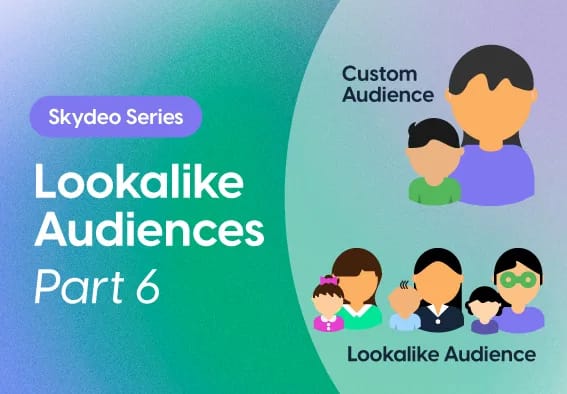
Lookalike audiences can be a game-changer for customer acquisition—but only if you use them right.
The truth? Most marketers are leaving performance (and profit) on the table because they’re not building or deploying their lookalike audiences the right way. Whether it’s bad seed data, overreliance on Facebook, or forgetting to test, the mistakes are common, and fixable.
Here’s the top 5 mistakes marketers make with lookalike audiences—and exactly how to fix them:
Mistake #1: Using a Weak or ‘Dirty’ Seed Audience
Your lookalike model is only as good as the data you feed it. If your seed audience includes one-time buyers, coupon chasers, or outdated contacts, the model will find more people just like them— not your ideal customer.
For example, a CPG brand uses a list of all past buyers—including people who only purchased once during a 30% off Black Friday promo. The resulting lookalike audience performs terribly—low engagement, high bounce rate, and flat ROAS.
How to fix it:
- Segment your top 5–10% of high-value customers (based on LTV, frequency, or margin)
- Clean your list—remove outdated or incomplete entries
- Use behavioral indicators (e.g. repeat purchase, engagement, loyalty) instead of just email openers or form submissions
A good seed audience = 1,000–5,000 high-quality users. More ≠ better. Better = better or garbage in = garbage out.
Mistake #2: Only Using Facebook Lookalikes
Facebook’s native lookalike tool is easy—but very limiting. You can’t reuse that audience outside Meta’s walled garden, and post-iOS14, signal loss has made performance a lot less reliable.
Say you’re a fintech app. You build a high-performing lookalike on Facebook, but when you try to scale with Google and CTV, you have to start from scratch—different audiences, different models, different performance.
How to fix it:
- Build portable lookalike audiences outside of Facebook using deterministic data
- Use tools like Skydeo Audience Marketplace (SAM) or LiveRamp to create audience models once and activate them anywhere
- Sync those audiences across Meta, TikTok, programmatic, CTV, email, and even direct mail
Portable lookalikes = one model, multi-channel scale.
Mistake #3: Going Too Broad, Too Fast
Going after a 10% lookalike audience might give you more reach, but it waters down the quality. Bigger isn’t always better—especially if you’re testing new creative or launching into a new channel.
Say you’re a luxury auto brand building a broad 10% lookalike to drive CTV impressions. You get views… but almost zero conversions. Why? The audience was too loosely matched to your high-intent buyers.
How to fix it:
- Start small (1–3% lookalike) to keep match quality high
- Test creative and offers with tighter audiences before scaling
- Once you find what works, gradually expand to broader tiers (5–10%)
It’s always better to start with precision, then scale with confidence. Not the other way around.
Mistake #4: Not Enriching the Seed Data
If your seed audience is just a basic email list or has no behavioral depth, your model doesn’t have much to learn from. Enriched data = smarter lookalikes.
Say you’re a DTC skincare brand, for example building a lookalike from Shopify customer emails. But because you didn’t enrich the data with purchase frequency or product affinity, the audience matches poorly—and ad engagement drops.
How to fix it:
- Enrich your data with behavioral data: purchase history, app usage, store visits, etc.
- Use platforms like Skydeo to layer in predictive attributes: location history, device data, income, and more
- Segment your seed list by value drivers, not just recency or total spend
The better your data enrichment, the more precise your modeling will be.
Mistake #5: “Set It and Forget It” Mentality
Lookalike performance degrades over time. Behavior changes. Markets shift. If you don’t refresh your models regularly, you’re optimizing for last quarter’s reality—not today.
Say for example you’re a subscription meal brand and you’ve built a killer lookalike audience in Q1. By Q3, performance dips. Why? The seed audience was built before you launched two new product lines—and you never updated it.
How to fix it:
- Refresh seed audiences quarterly (or after major product or offer changes)
- Continuously A/B test different lookalikes and creative combinations
- Monitor performance by channel—what works on Meta can flop on CTV
Set a calendar reminder. Rebuild and re-score every 60–90 days.
Bonus Mistake: Thinking Lookalikes Are Just for Acquisition
They’re not.
Yes, lookalikes are amazing for top-of-funnel prospecting—but they’re just as valuable for:
- Retargeting expansion (when pools are too small)
- Product launches (find new buyers for new SKUs)
- Direct mail (build lookalikes of recent in-store buyers)
- Churn prevention (model audiences likely to stay based on best customers)
If you only use lookalikes for prospecting, you’re leaving money on the table.
Want to Fix Your Lookalike Strategy?
Skydeo Audience Marketplace (SAM) gives you instant access to 30,000+ predictive audience segments and lets you build smarter, portable lookalike audiences—using real-world behavioral data, not black-box guesses.
Ready to build a better audience?
Ready to Dive Deeper?
Lookalike Audiences vs Predictive Audiences: What’s the Difference and Which Should You Use?
How Lookalike Modeling Works: The Data, The Math, and the Machine Learning Behind It
The Best Data for Lookalike Modeling (And Where to Get it)
Facebook Lookalikes Aren’t EnoughL Why Brands Need Portable Lookalike Audiences
Lookalike Modeling for B2B? Yes it Works, And Here’s How to Do It.


