Lookalike Modeling for B2B? Yes it Works and Here’s Exactly How to Do it
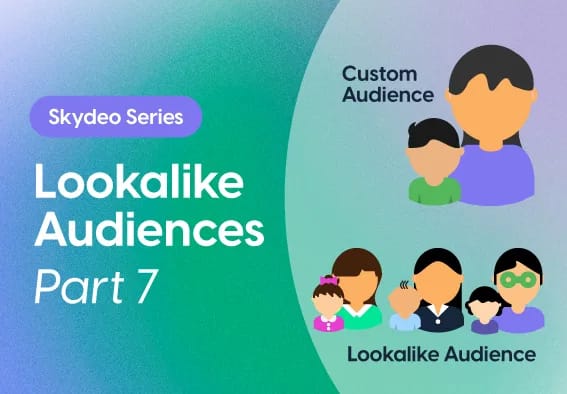
Let’s get this out of the way first: Yes, lookalike modeling works in B2B. Is it different from B2C? Definitely. But the fundamentals are the same—you’re trying to find more people who look and act like your best customers. The difference is how you define those customers, and what data you’re feeding the model.
If you’re running demand gen for a B2B SaaS company or managing ABM campaigns and think lookalikes are only for DTC brands selling yoga pants—you’re leaving customers and money on the table.
Here’s how to make lookalike modeling actually work in B2B.
First: Yes, B2B Has a Lookalike Problem
Here’s the challenge that most B2B marketers run into when trying to do lookalikes:
- Smaller customer lists
- Longer sales cycles
- Complex buying committees
- Hard-to-source behavioral data
That’s real. But these are deal breakers, but you have to be smarter about your seed audience and data signals.
Start With the Right Seed Audience
If you’re in B2B, your seed audience isn’t just “customers.” It’s your best-fit accounts—the ones that close fast, churn less, expand more, and actually use your product.
Say you’re running marketing at a martech platform. Instead of dumping your whole customer list into a seed audience, you should start with:
- 50 mid-market brands who expanded in year one
- Closed in under 60 days
- Who had active product usage in the first 30 days
That’s gold. That gives your model a fighting chance to go find more companies like those.
If you just used everyone in your CRM who signed up since 2019? Garbage in = garbage out.
Use Company-Level Signals, Not Just Contacts
B2B decision-making happens at the account level. So your model needs to be built on more than job titles and email addresses.
You want to layer in:
- Firmographics (industry, revenue, headcount)
- Technographics (what tools they use—CRM, CMS, cloud provider, etc.)
- Website behavior (return visits, pricing page views)
- Intent signals (who’s researching topics in your category)
- Past campaign engagement (opens, clicks, webinar attendance)
For example, if you’re targeting IT buyers at healthcare companies, don’t just model based on the people who filled out your demo form. Use enrichment data to identify the company profiles behind those contacts—like “250–1,000 employee firms in medtech using Snowflake and AWS.”
That’s the level of precision your model needs to work and perform.
Think “Accounts,” Then “People”
Once you’ve trained your model on the right companies, it’s time to map it to real contacts.
Let’s say you build a lookalike model of your best customer accounts using Skydeo.
From there, you layer in title and department data to identify:
- Marketing Ops at account A
- Demand Gen Manager at account B
- VP of RevOps at account C
This is where you shift from “Lookalike Companies” to “Lookalike People.”
Now you can activate across LinkedIn, programmatic, email, or direct mail—wherever those people are.
The Channels That Actually Work
For B2B, we’re not just talking about Meta or TikTok.
Instead, think:
- LinkedIn (obviously)
- Programmatic display (for mid- to upper-funnel)
- Email (with contact-level match)
- Direct mail (if you’re ABM-heavy)
- Custom audiences in sales outreach platforms (like Outreach or Apollo)
The key is portability. Don’t build a lookalike model that only works on one platform. You want an audience you can activate everywhere your buyer shows up.
How it Comes Together
Let’s say you sell to CISOs at enterprise financial services firms. Your seed audience might be:
- 20 accounts where deal size was $250K+
- Closed in the past 12 months
- Buyers attended at least one webinar pre-sale
- Existing tech stack included CrowdStrike and Okta
You enrich that with firmographic and behavioral data, train your lookalike model, and identify 500 similar accounts.
Now you push that list into:
- LinkedIn for targeted thought leadership ads
- A direct mail platform to send a CISO field report
- Outreach sequences personalized by industry
You just scaled your best-fit TAM without guessing. That’s the power of lookalike modeling in B2B.
Common Pitfalls
Even the smartest marketers can get tripped up with lookalike modeling—especially in B2B. It’s not that the strategy doesn’t work. It’s that the inputs, assumptions, or execution aren’t quite right. Here are the most common mistakes we see—and how to steer clear of them.
Too-small seed audience.
<50 accounts? You might need to enrich or combine cohorts to hit modeling thresholds.
Modeling off leads instead of customers.
Just because someone downloaded your whitepaper doesn’t mean they’re a good customer. Model off real wins.
Relying on one data source.
Use multiple inputs—CRM, firmographics, technographics, behavioral data—to improve accuracy.
Not refreshing your model.
Your ICP evolves. So should your lookalike audiences. Refresh quarterly or after major product shifts.
What It All Comes Down To
Lookalike modeling isn’t just for consumer brands with massive lists and flashy Meta ads. It’s just as powerful in B2B—if you tailor the approach. When done right, it helps you reach the right companies, the right buyers, and the right decision-makers without wasting spend. But you have to respect the differences: smaller deal volumes, longer sales cycles, complex buying committees, and limited data. That means getting intentional about your seed audiences, your enrichment strategy, and your targeting tactics.
The good news? B2B buyers are still people. They browse, click, visit, and download. And when you use those signals through smarter modeling, you stop guessing—and start finding more of the leads that actually convert.
If you’re serious about improving pipeline quality and driving efficient growth, lookalike modeling should be part of your playbook. Just make sure you’re not copy-pasting a B2C approach.
Want to Build Better B2B Lookalike Audiences?
Skydeo Audience Marketplace (SAM) gives you instant access to 30,000+ predictive audience segments and lets you build smarter, portable lookalike audiences—using real-world behavioral data, not black-box guesses.
Ready to build a better audience?
Ready to Dive Deeper?
Lookalike Audiences vs Predictive Audiences: What’s the Difference and Which Should You Use?
How Lookalike Modeling Works: The Data, The Math, and the Machine Learning Behind It
The Best Data for Lookalike Modeling (And Where to Get it)
Facebook Lookalikes Aren’t Enough: Why Brands Need Portable Lookalike Audiences
5 Mistakes Marketers Make with Lookalike Audiences (and How to Fix Them)


